Control the yard.
Control the plant.
A Yard Management System is the material-control layer that connects production, process buffers, quality, logistics, service centres, and dispatch.
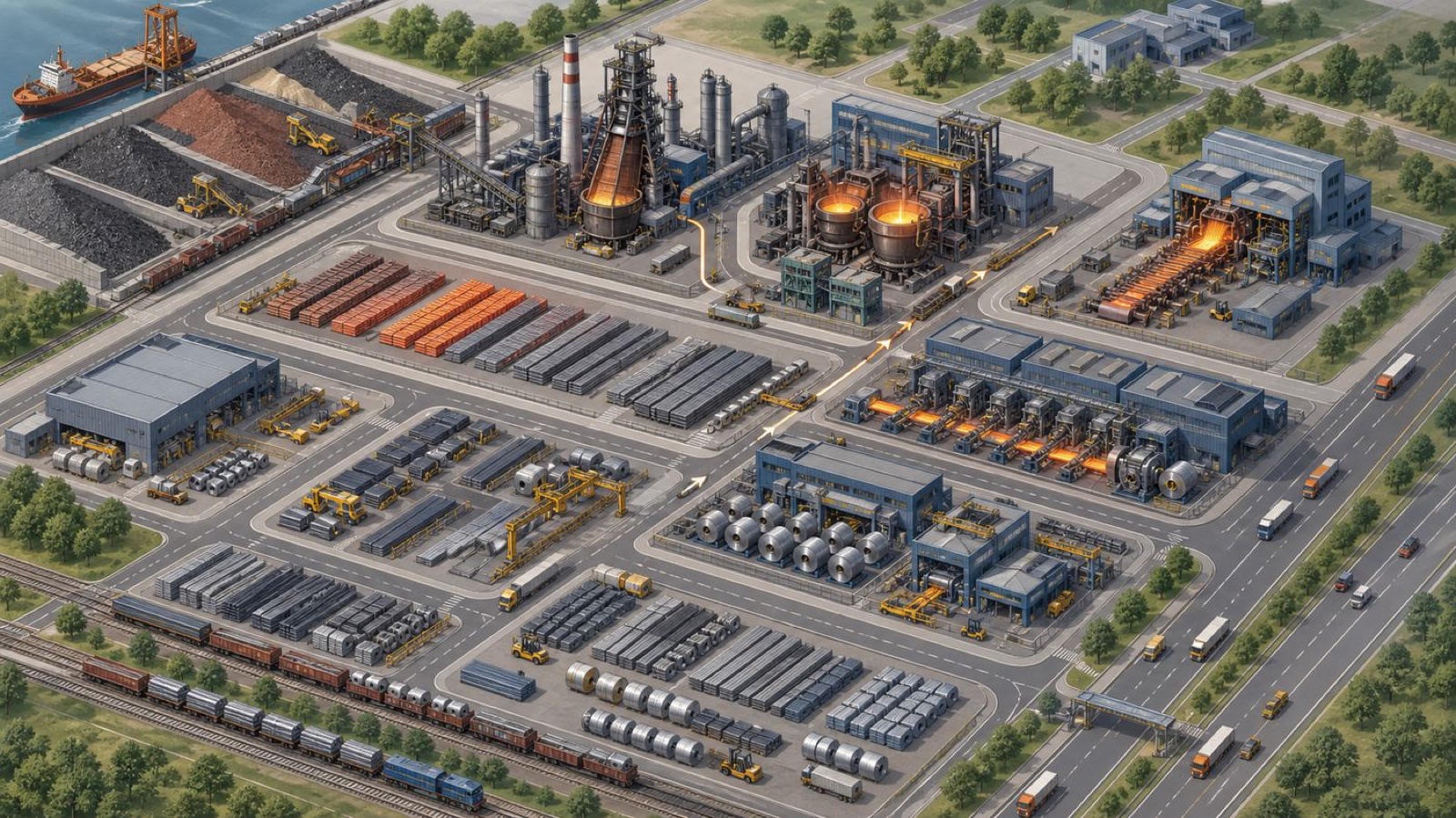
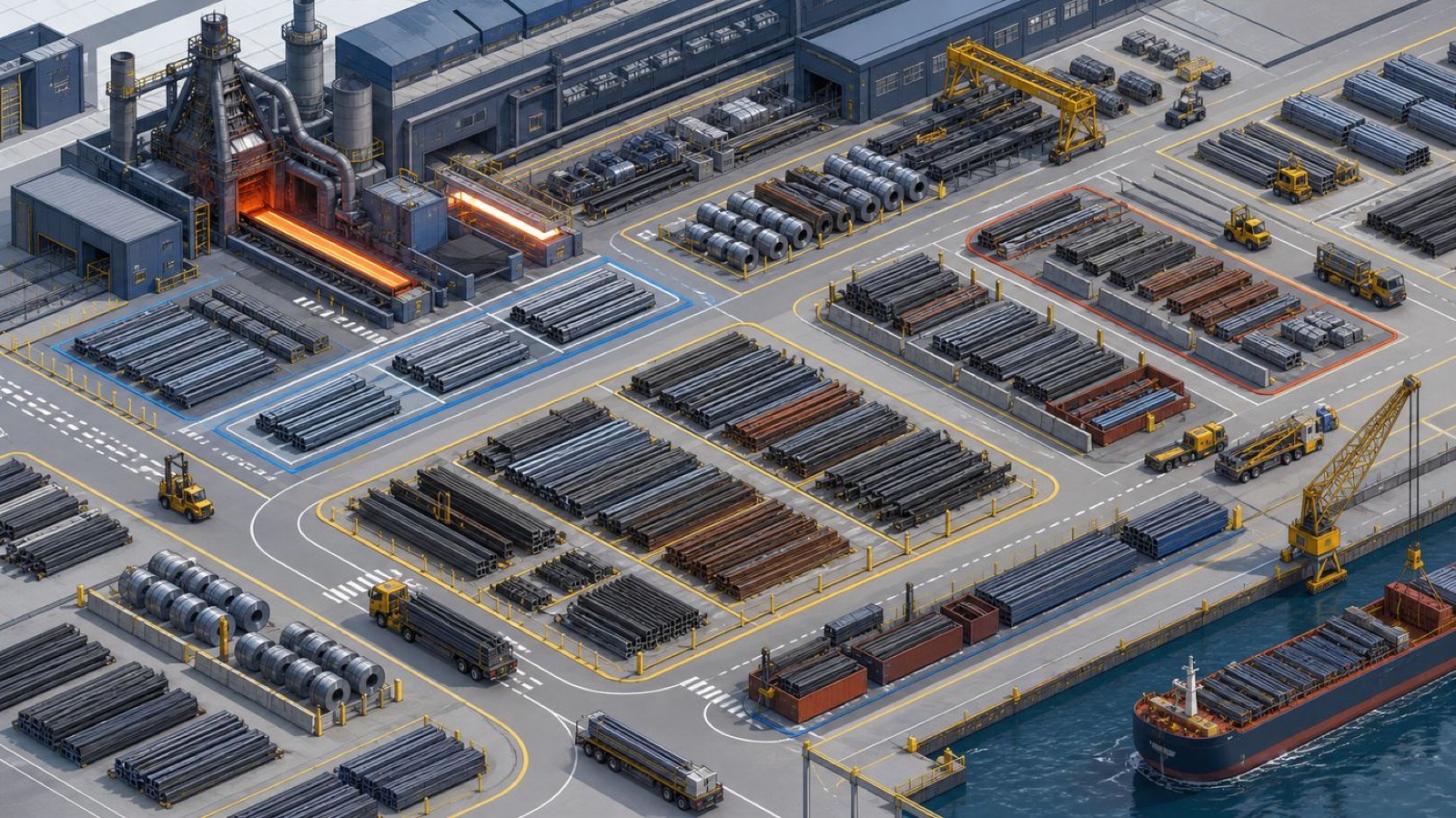
Steel yards are the plant’s hidden control system.
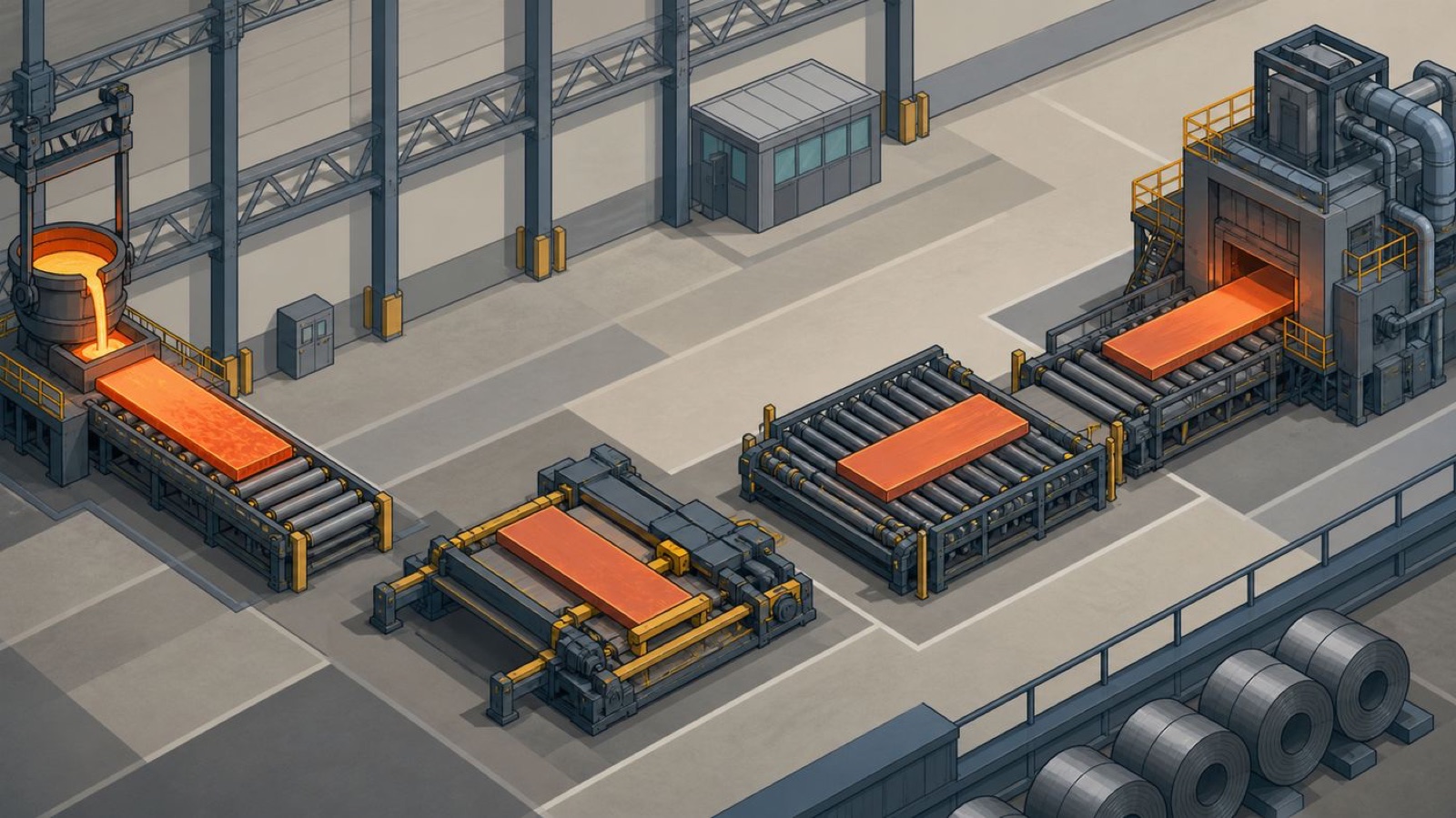
A large integrated steel plant is a network of raw-material yards, casting yards, slab and coil yards, process buffers, service centres, finished-goods yards, rework areas, transfer locations, and dispatch staging zones.
More than storage
Yards buffer mismatched production rates, preserve sequence, stage customer orders, protect quality status, and keep the next operation supplied.
More than inventory
Material may be physically present but unavailable because it is unidentified, quality-held, buried, reserved, inaccessible, or waiting on a process decision.
More than a yard
Conveyors, transfer tables, inspection tables, cutting platforms, equipment locations, vehicles, and temporary staging areas are all genuine material locations.
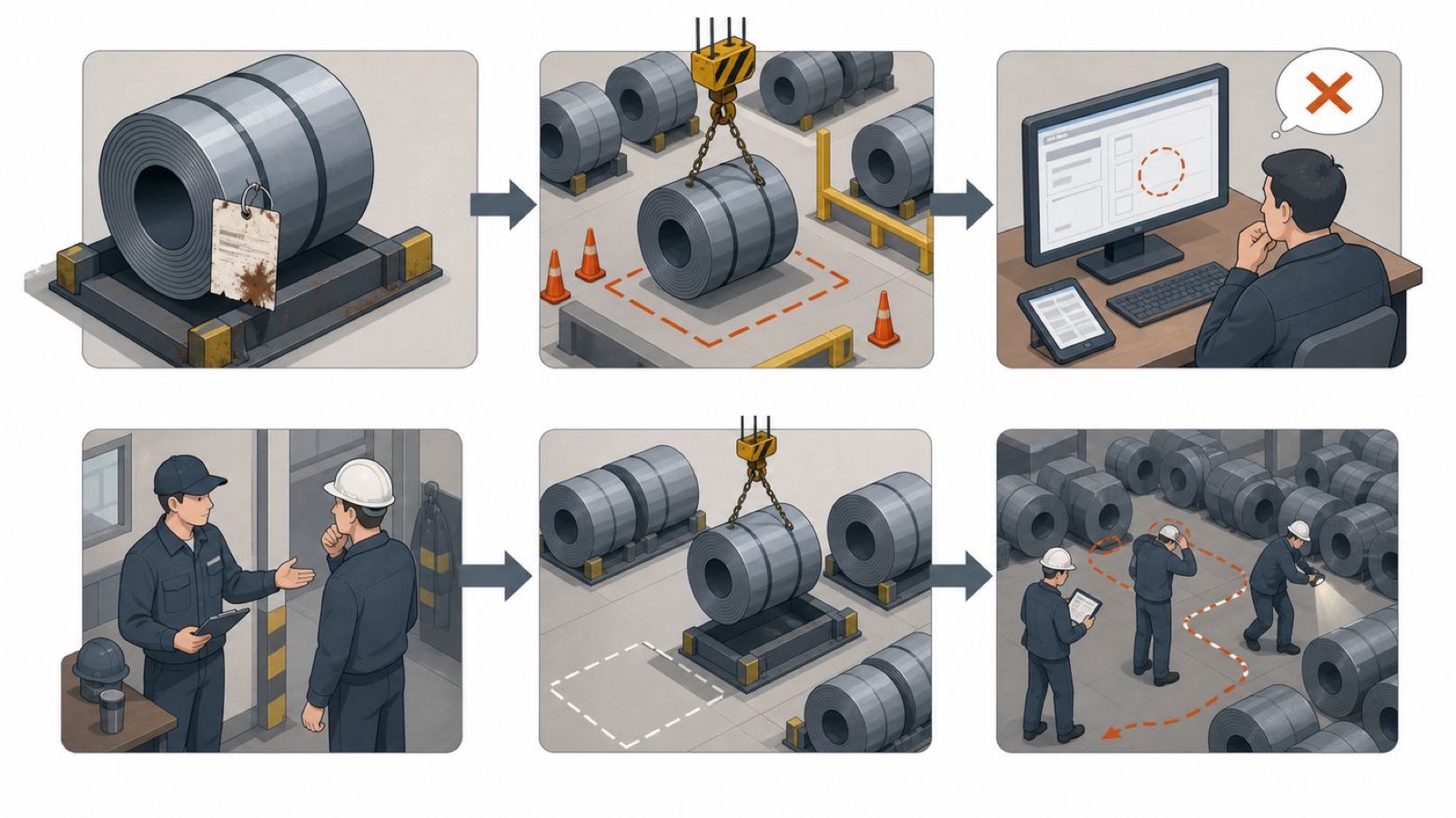
Physical reality moves faster than system reality.
Under shift pressure, a crane clears a production exit, a vehicle drops material in an overflow area, or a supervisor changes the plan verbally. If the actual pick, move, place, status, and location are not confirmed, the system begins to describe a different plant.
That divergence accumulates until the plant needs a disruptive reconciliation campaign.
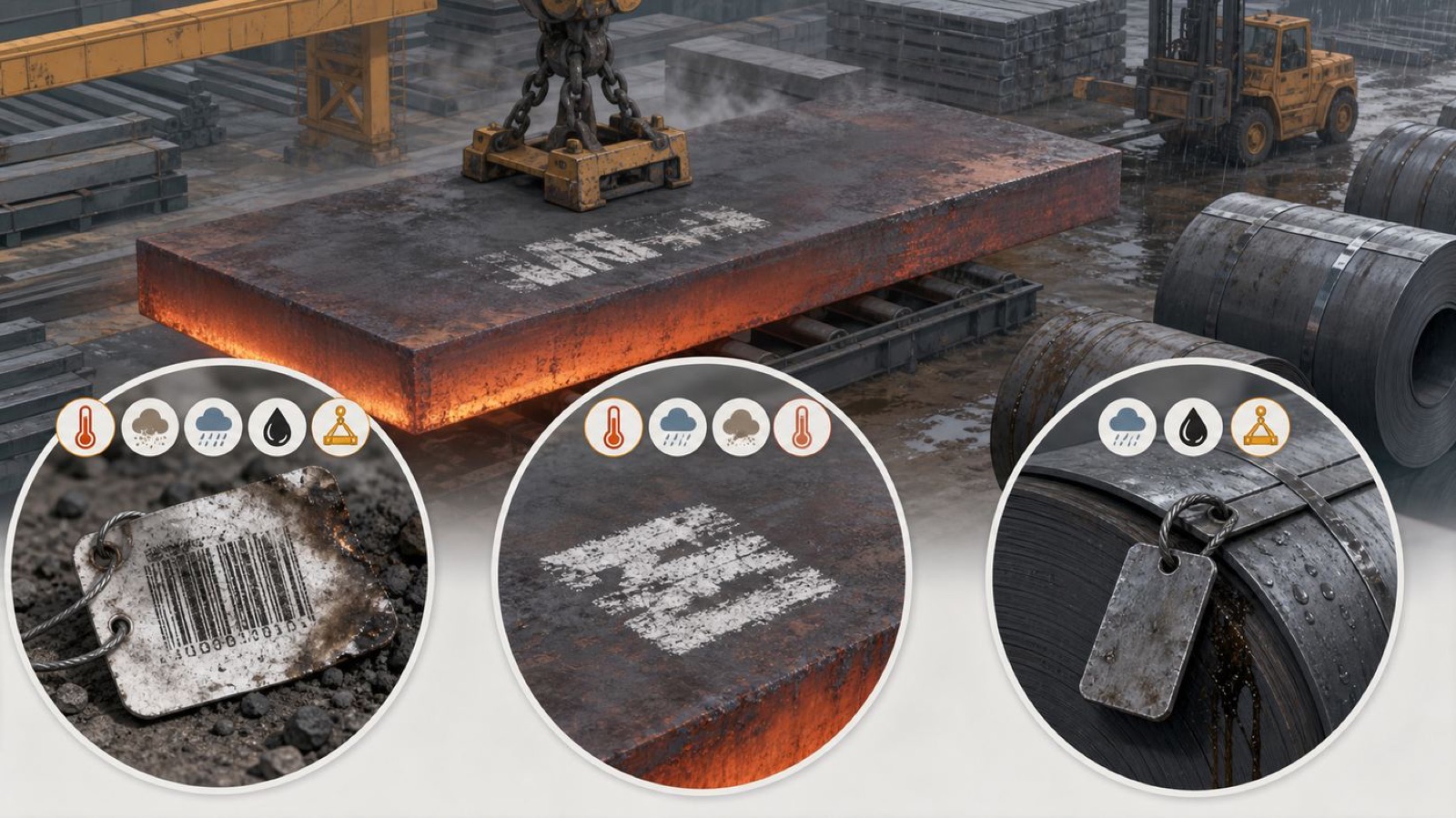
Six failures hide inside “inventory accuracy.”
Identity failure
The material is present but the tag, marking, barcode, or genealogy cannot confidently identify it.
Location failure
The material exists but its actual bay, row, slot, layer, coordinate, vehicle, or process position is unknown.
Status failure
Quality, allocation, reservation, rework, release, or dispatch status is incorrect or incomplete.
Accessibility failure
The material is known but buried, blocked, unsafe, or unreachable by the available equipment.
Harsh identification
Heat, scale, dust, rain, oil, handling impact, and poor lighting defeat otherwise sound barcode, paint, tag, RFID, or OCR approaches.
Conflicting priorities
Production, cranes, quality, logistics, dispatch, and inventory control may optimize different outcomes.
Material control extends beyond formal yards.
The YMS must manage the material-location relationship across storage, process, transfer, inspection, transport, and staging locations.
Placement is not retrieval.
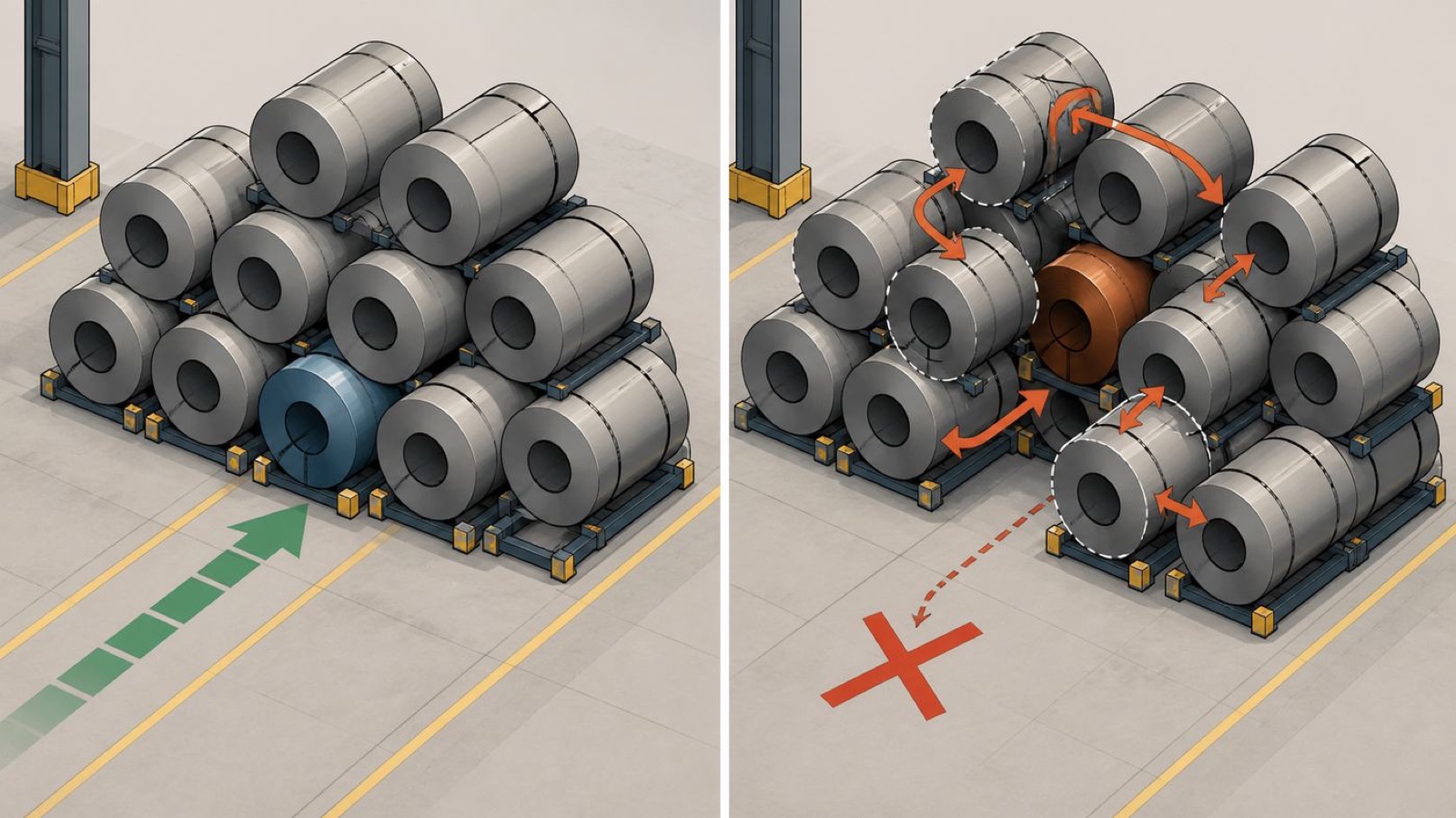
A location may be valid for placing a coil or slab but unsuitable for retrieving it at the required time. The YMS must understand stack sequence, blocking material, crane reach, relocation effort, and urgency.
Temporary is not informal.
Every temporary placement, overflow area, in-transit state, transfer table, and vehicle location needs an identity, owner, status, capacity, and exit rule.
Inventory is useful only when it can be retrieved.
The YMS should distinguish directly accessible material from material requiring one relocation, multiple relocations, or an unsafe recovery. A coil requiring five rehandles is not operationally equivalent to a directly accessible coil.
Transformation makes material control harder.
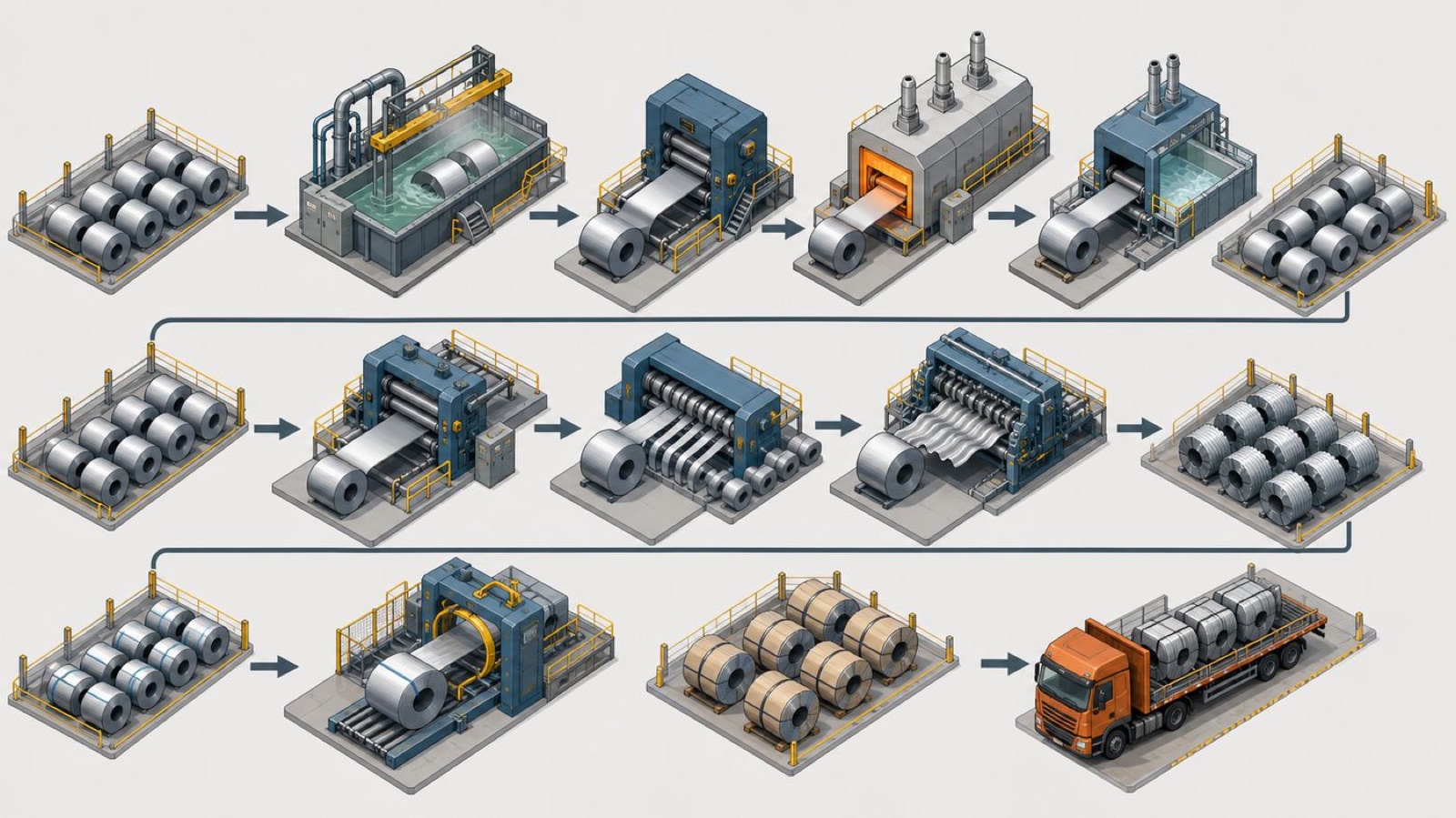
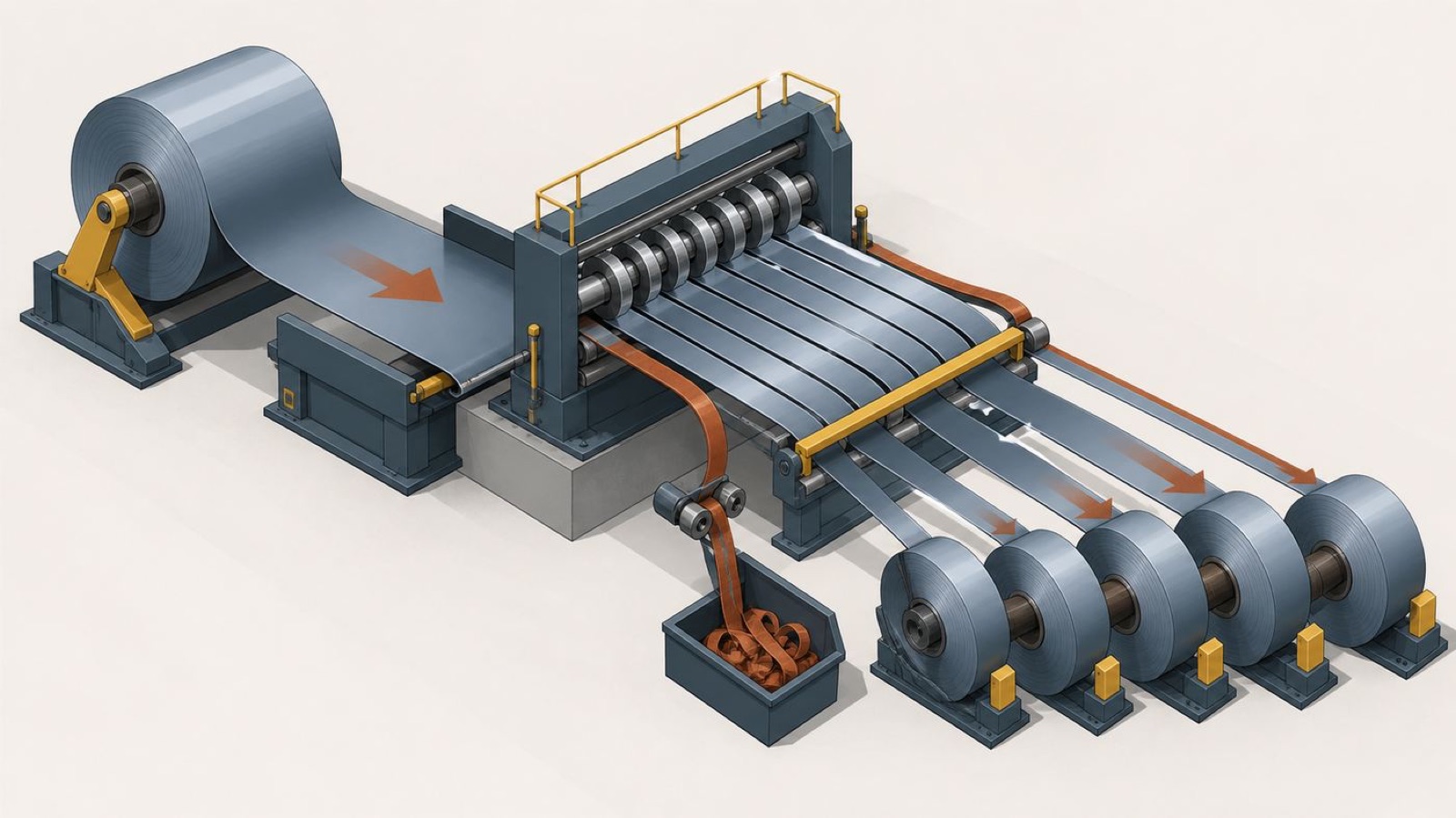
Service centres combine production, warehouse, order fulfillment, and dispatch. A parent coil may become multiple child coils, sheets, bundles, trim, scrap, and a remnant—each with its own identity, quantity, status, allocation, and physical location.
Commercial availability
Physically present does not mean freely usable. Material may be customer-owned, reserved, allocated, or awaiting approval.
Partial consumption
Consumed quantity, remaining quantity, saleable output, scrap, crop, trim, and remnant must all reconcile.
Dispatch readiness
Finished output must be identified, released, packed, allocated, accessible, and ready for the intended order.
A dedicated YMS restores operational truth.
The YMS should complement ERP and MES by controlling the physical execution layer that connects system plans to what is actually happening on the ground.
Identify
Maintain resilient material identity, genealogy, and evidence.
Locate
Represent yards, stacks, process positions, vehicles, and temporary locations.
Execute
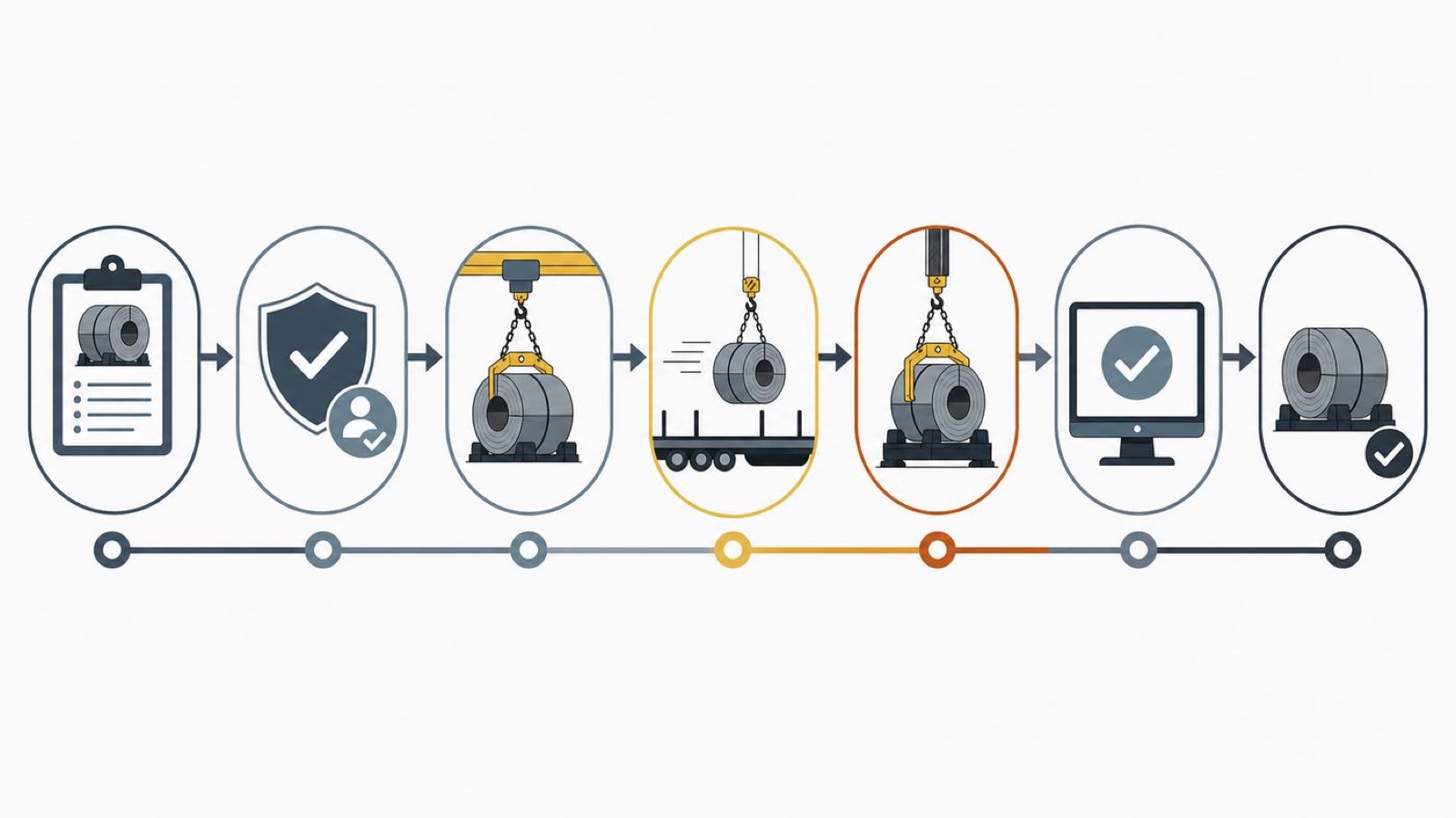
Control request, authorize, pick, move, place, confirm, and close.
Resolve
Surface exceptions immediately with owners, clocks, and audit trails.
One current answer for every material.
A controlled yard can answer, at any time:
Production continuity
Reliable feed planning, sequence preservation, buffer visibility, and faster response to breakdowns.
Delivery performance
Better dispatch readiness, order allocation, loading accuracy, and vehicle turnaround.
Operational efficiency
Less searching, rehandling, empty travel, congestion, unsafe stacking, and repeated reconciliation.
Enterprise backbone plus steel-specific execution.
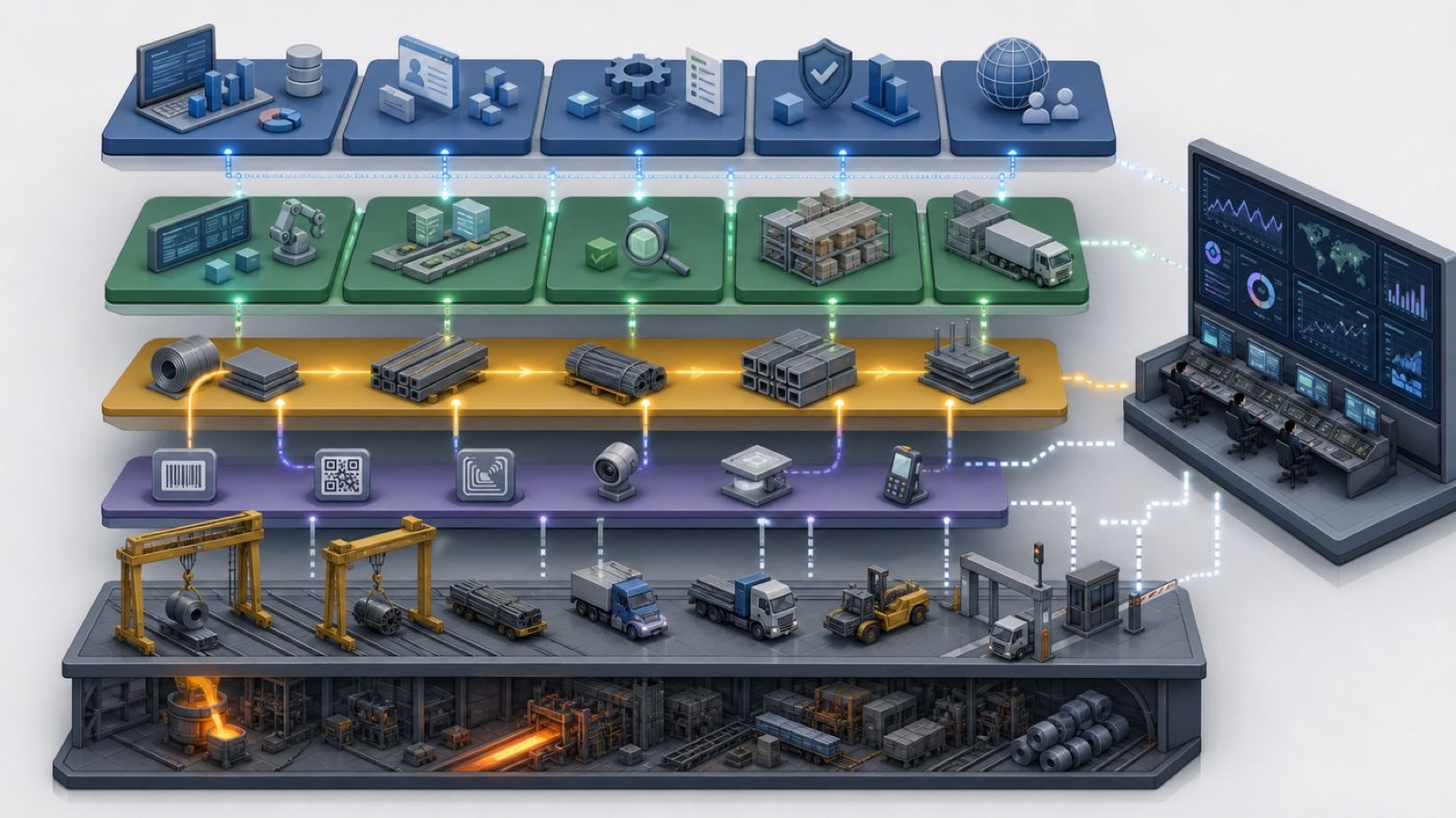
ERP remains the source for commercial and financial control. MES remains the source for process execution and production events. The YMS provides plant-wide physical material control and integrates with quality, weighbridges, cranes, vehicles, identification devices, and analytics.
Build discipline before intelligence.
Progressive implementation should begin with reliable identities, locations, movement transactions, and reconciliation visibility. It can then mature toward mobile execution, exception control, crane and vehicle orchestration, accessibility-aware retrieval, real-time positioning, optimized stacking, and semi-autonomous movement. Advancement between levels is gated by the system proving itself against KPI thresholds, never by a fixed calendar — and maturity is tracked per product line, so Finished Goods and hot Slab handling can sit at different levels at the same time.
Visibility
Identity, location master, movement records, physical inventory.
Execution
Mobile confirmations, temporary locations, quality integration, handover.
Orchestration
Tasks, cranes, vehicles, congestion, accessibility, dispatch.
Intelligence
Positioning, prediction, optimization, digital twin, automation.
One operating discipline across many yard realities.
The target model uses common controls across raw-material exclusions, casting yards, HSM, CRM, finished goods, service centres, rework, and extended process locations—while allowing each area to apply its own planning drivers, decision rights, confirmation methods, and exceptions.
Correct action
Make the correct physical and digital action the easiest action under shift pressure.
Temporary is named
Every overflow, in-transit, equipment, table, vehicle, and staging position is a first-class location.
One current answer
At any moment, the plant can state the material, location, status, accessibility, and owner.
From identity creation to final dispatch.
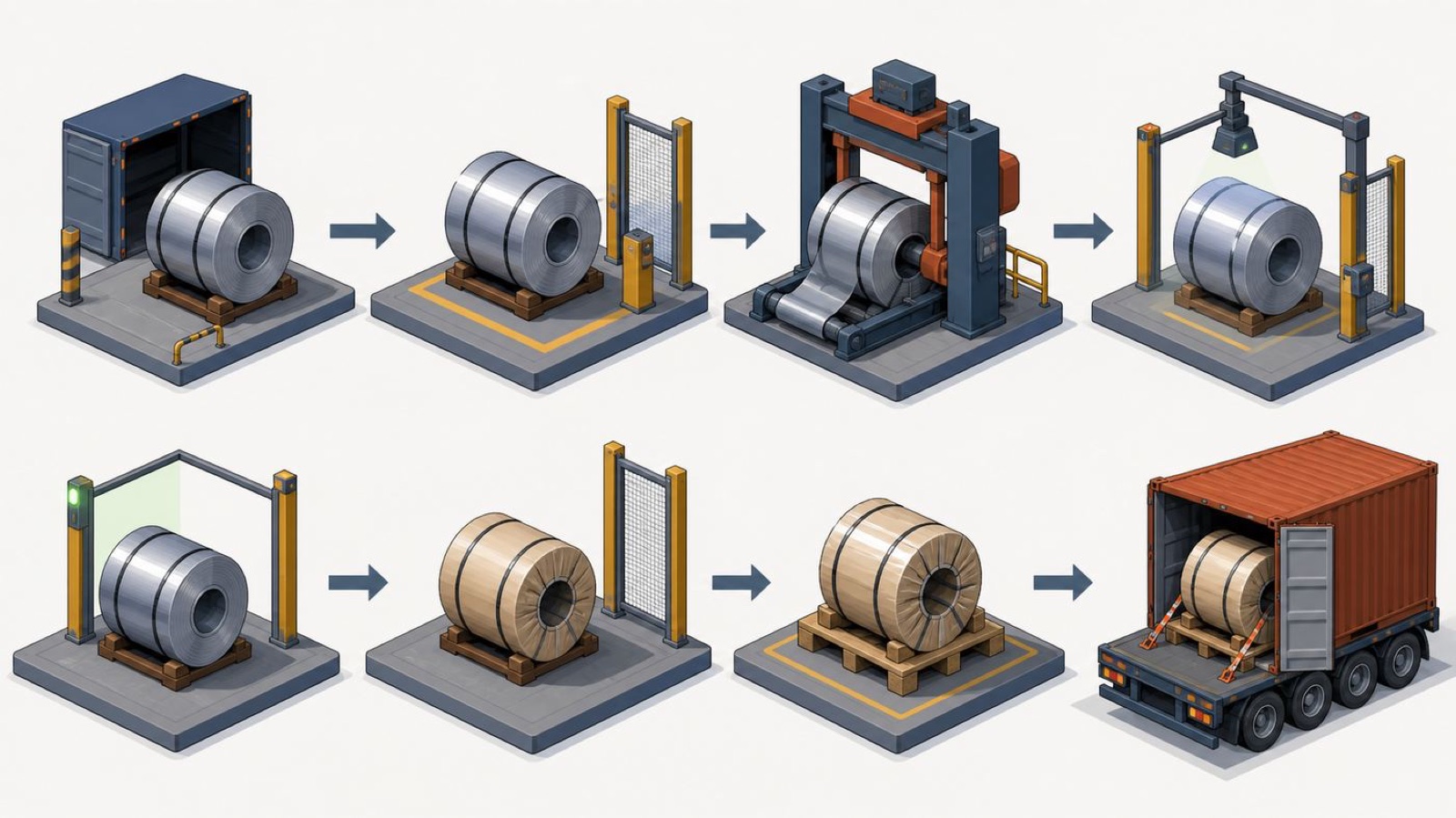
Every material follows a common control backbone while retaining product-specific rules. MES owns production and genealogy events; YMS consumes those events and controls physical position, movement, status, and availability.
Slabs, billets, blooms, ingots
Control casting output, hot-material identity, cooling, sequence, storage, and downstream feed.
Coils and plates
Track process transitions, quality release, stacking, accessibility, customer allocation, and dispatch.
Bundles and service outputs
Manage handling units, partial quantities, parent-child genealogy, remnants, scrap, and packing.
A common data language for the physical plant.
The YMS control model represents the objects that make material execution visible and accountable.
Combined-confidence record
The essential record is: material ID + physical location + stack position + status + timestamp. It should also retain evidence, owner, accessibility, and confidence state.
Three inventory views
Systematic inventory, physical inventory, and operational inventory must be visible separately so that “available” does not hide identity, location, status, or accessibility failure.
Every physical event closes the digital loop.
Operational workflows are organized into movement, MES-consumption, quality-disposition, and cross-cutting control families.
Move
Put away, stack, re-stack, relocate, retrieve, transfer, stage, load, and depart.
Consume
Receive, produce, transform parent to child, record partial consumption, and generate scrap.
Decide
Inspect, hold, release, rework, downgrade, quarantine, and return.
Control
Identify, reconcile, use manual fallback, and survey or correct location master data.
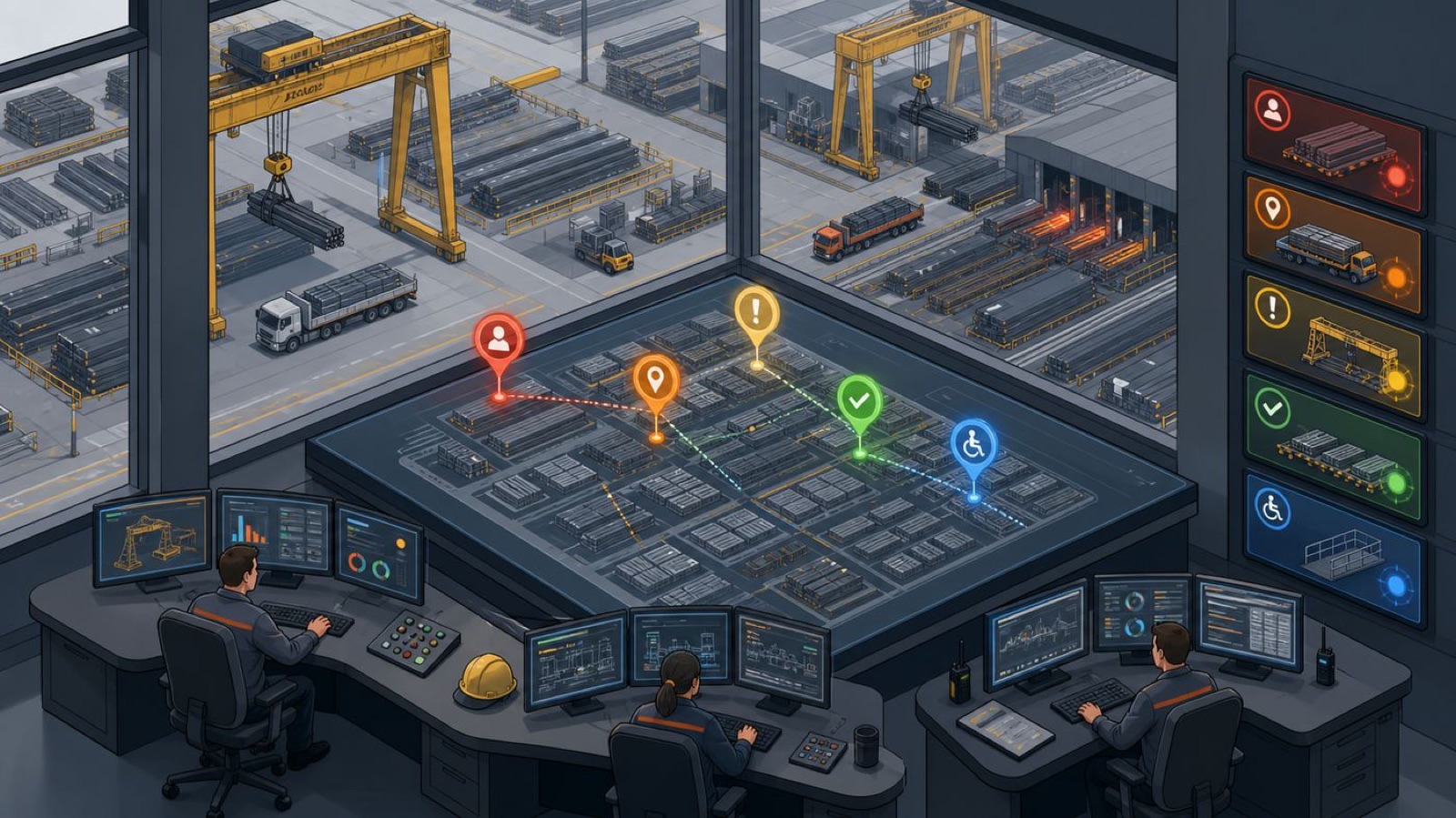
YMS turns yard information into shift decisions.
YMS orchestrates physical execution; it does not replace MES production planning or ERP commercial planning. Its role is to convert those plans into feasible, prioritized, and executable yard work.
Shift and daily plans
Balance production feed, dispatch commitments, open tasks, capacity, equipment, and people.
Resources and routes
Assign cranes and vehicles, reduce empty travel, sequence retrievals, and manage congestion.
Exceptions and emergencies
Handle breakdowns, unavailable locations, urgent moves, overflow, weather, and changing priorities.
Make the invisible operationally visible.
Reconciliation should be a fallback and learning mechanism—not the primary way the plant discovers that control has failed.
Identity and quantity
Missing ID, unreadable tag, unidentified material, duplicate identity, and quantity mismatch.
Location and accessibility
Wrong location, planned location unavailable, blocked material, unavailable location, unsafe stack.
Status and movement
Quality conflict, unrecorded movement, parent-child mismatch, wrong vehicle, crane failure, network failure.
Severity tiers
Tier 1 blocks production or dispatch. Tier 2 must close or be handed over by shift end. Tier 3 is a scheduled data or process-quality issue.
Every exception has a clock
A named owner, temporary control, target closure time, audit trail, root cause, and preventive-action feedback are required.
Technology needs clear decision rights.
The operating model assigns decisions across the Operations Incharge, yard and shift supervisors, crane operators, ground staff, planners, quality, logistics, dispatch, weighbridge, maintenance, contractors, and inventory control.
Point of work
Operators and ground staff confirm identity, pick, placement, and physical exceptions where the work happens.
Operational control
Supervisors own priorities, deviations, handover completeness, location discipline, and immediate exception response.
Functional authority
Quality controls release and disposition; planners control sequence; dispatch controls order readiness; inventory control owns accuracy.
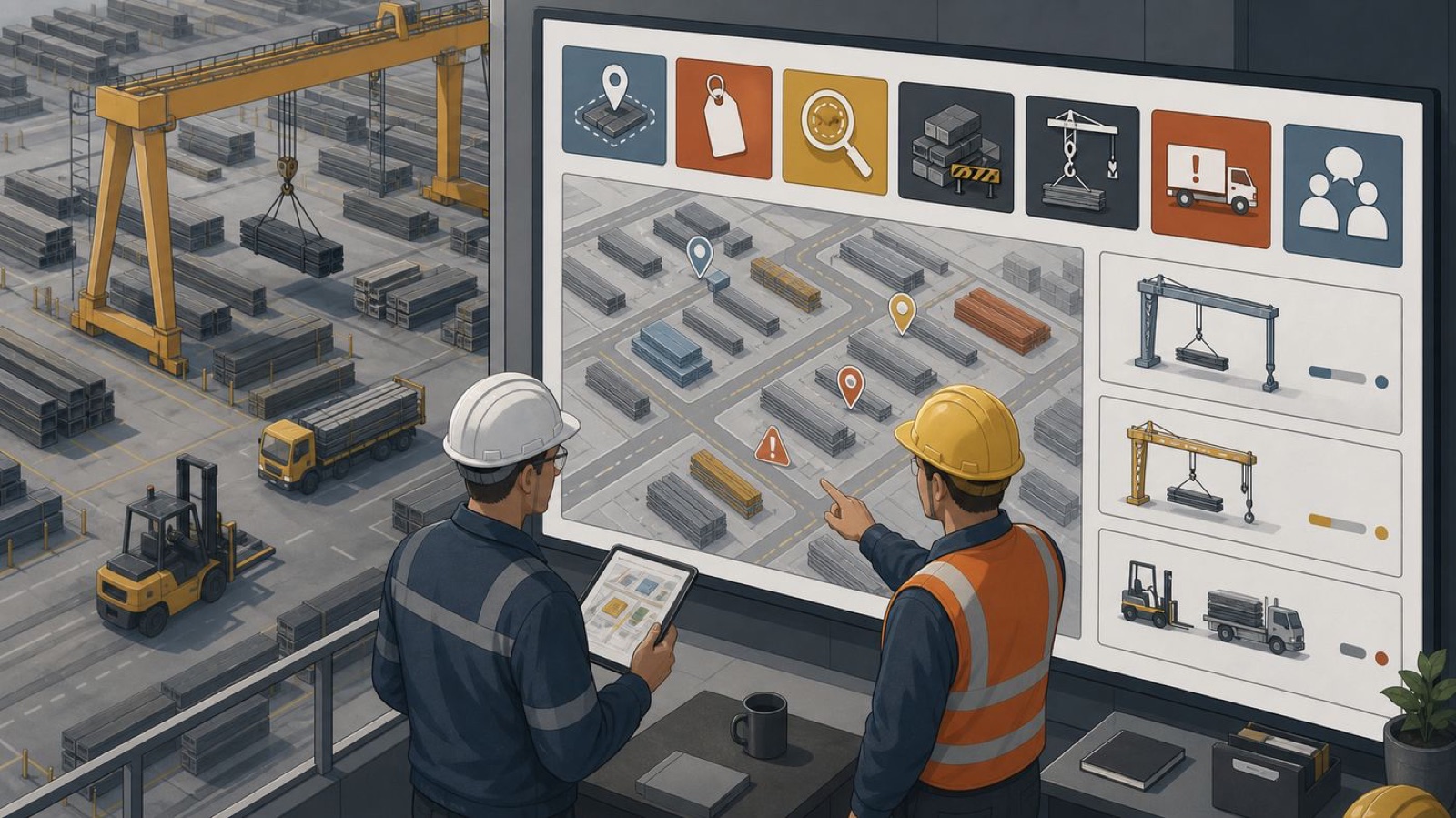
Measure control, not only tonnes moved.
Dashboards should compute from the objects and events already defined in the YMS, giving each audience the information needed for action.
Inventory control
Identity confidence, location accuracy, quantity accuracy, unrecorded movements, and unidentified material.
Yard execution
Search time, retrieval success, crane utilization, empty travel, rehandling, occupancy, overflow, and blocked locations.
Business performance
Material dwell, quality-hold aging, production-feed availability, dispatch readiness, truck turnaround, and delivery adherence.
Integrate the enterprise with the physical edge.
The architecture should follow the operating model and define clear systems of record rather than duplicate decisions across applications.
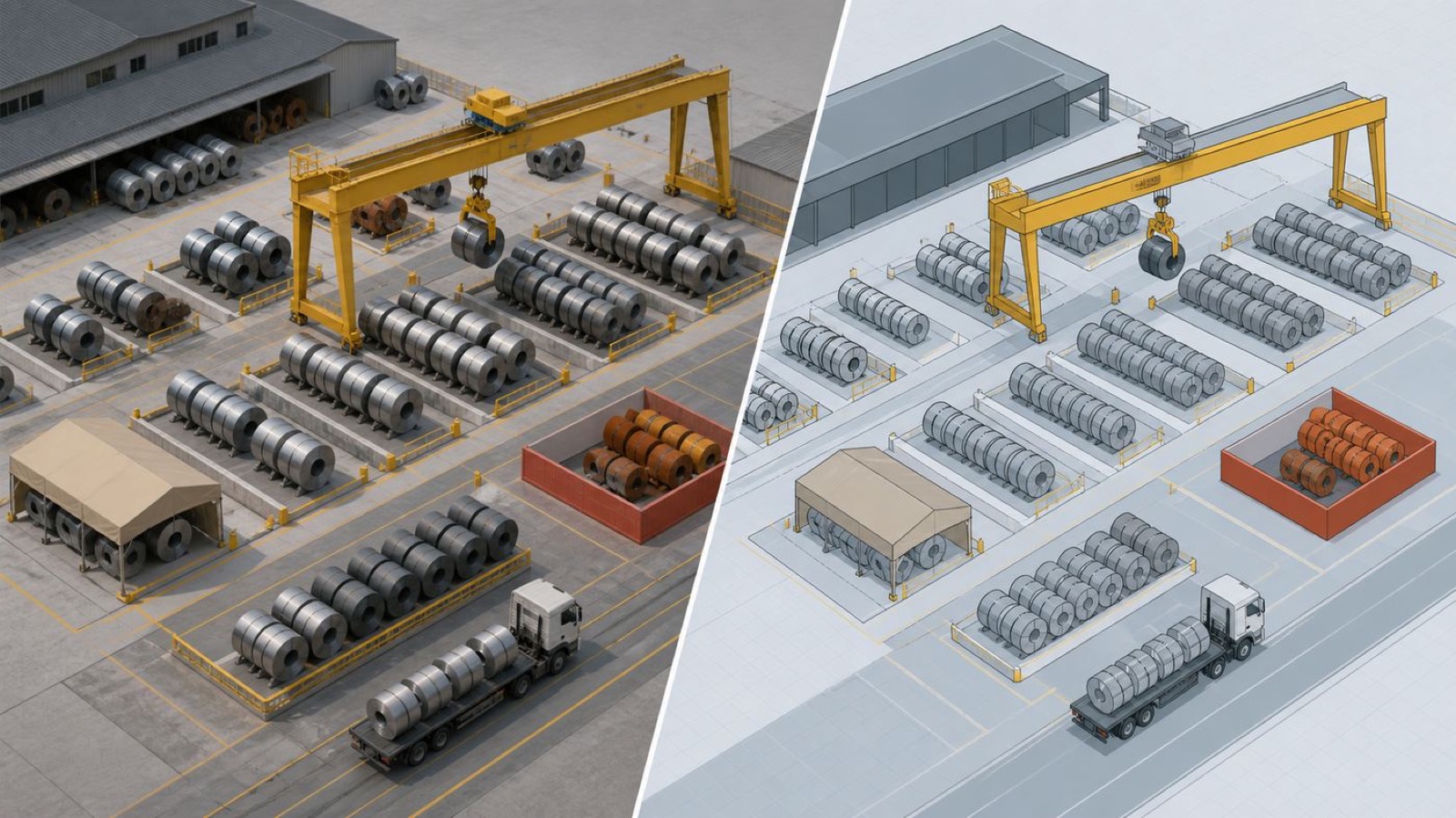
Enterprise systems
ERP manages commercial and financial control. MES manages process execution, production events, recipes, genealogy, and quality status as an MES module — supporting systems such as LIMS or QMS may feed MES upstream, but YMS integrates with MES only.
YMS execution layer
YMS manages physical locations, movement tasks, temporary states, stacks, accessibility, exceptions, handover, and operational availability.
Physical edge
Identification technology varies by product, shape, and thermal condition — hot and cold material, and coils versus slabs, cannot share the same tag approach; finished goods are the one case where a uniform approach applies. MES issues identity and auxiliary systems print the physical tag; YMS should replicate that logic for lost-and-found. Connect scanners, RFID, OCR, vision, weighbridges, cranes, vehicles, conveyors, positioning, mobile devices, and control-room analytics.
Degraded-mode resilience
Offline operation, local queues, device recovery, duplicate prevention, and reconciliation must be designed for network and equipment failure.
Intelligence after discipline
AI should support prediction, congestion, aging, retrieval, and root-cause analysis only after reliable identity and movement events exist.
Enterprise platforms provide the backbone; steel reality needs careful fit.
SAP EWM with Yard Logistics, Oracle WMS Cloud, and Infor WMS are credible enterprise platforms to benchmark. They offer strong warehouse, task, inventory, integration, and dispatch capabilities, but hot material, irregular stacks, crane-centric execution, process locations, and steel genealogy may require extensions or a specialist execution layer.
SAP EWM + Yard Logistics
Best initial fit for SAP-centric steel companies; strongest enterprise integration and yard-visit capability, with high configuration and implementation complexity.
Oracle WMS Cloud
Strong cloud warehouse, yard check-in, task, location, and fulfillment platform; requires careful design for hot steel, open yards, and plant-wide orchestration.
Infor WMS
Strong best-of-breed execution, visualization, labor, and service-centre fit; steel-specific genealogy, crane, and open-yard behavior still need validation.
Do not automate an unvalidated operating model.
The operating model, roles, KPIs, architecture, and maturity path across all ten design areas are fully resolved. What remains — pilot scope and the phased identification-technology rollout — is deliberately left for the discovery phase with the customer, not an open design question.
Baseline the problem
Measure inventory variance, search time, rehandling, dwell, crane utilization, dispatch delay, and reconciliation cost.
Validate with operators
Use shift observation and workshops to test assumptions about identity, locations, handovers, devices, and decision rights.
Pilot a representative flow
Start with a material flow that exposes identity, stacking, process buffer, quality, accessibility, and dispatch challenges.
The objective is not merely to make system quantity equal physical quantity. It is to make every material identifiable, located, correctly classified, accessible, and available for the right purpose at the right time.
Start a conversation about your yard reality.
Tell us where material control breaks down, and we can walk through the next practical step for your plant.