Service Centre Solution
A practical planning and optimization approach for steel service centres — match customer orders to available material, build production plans that respect real machine and tooling limits, raise supplier indents only for genuine shortfalls, and see the trade-offs before you commit.
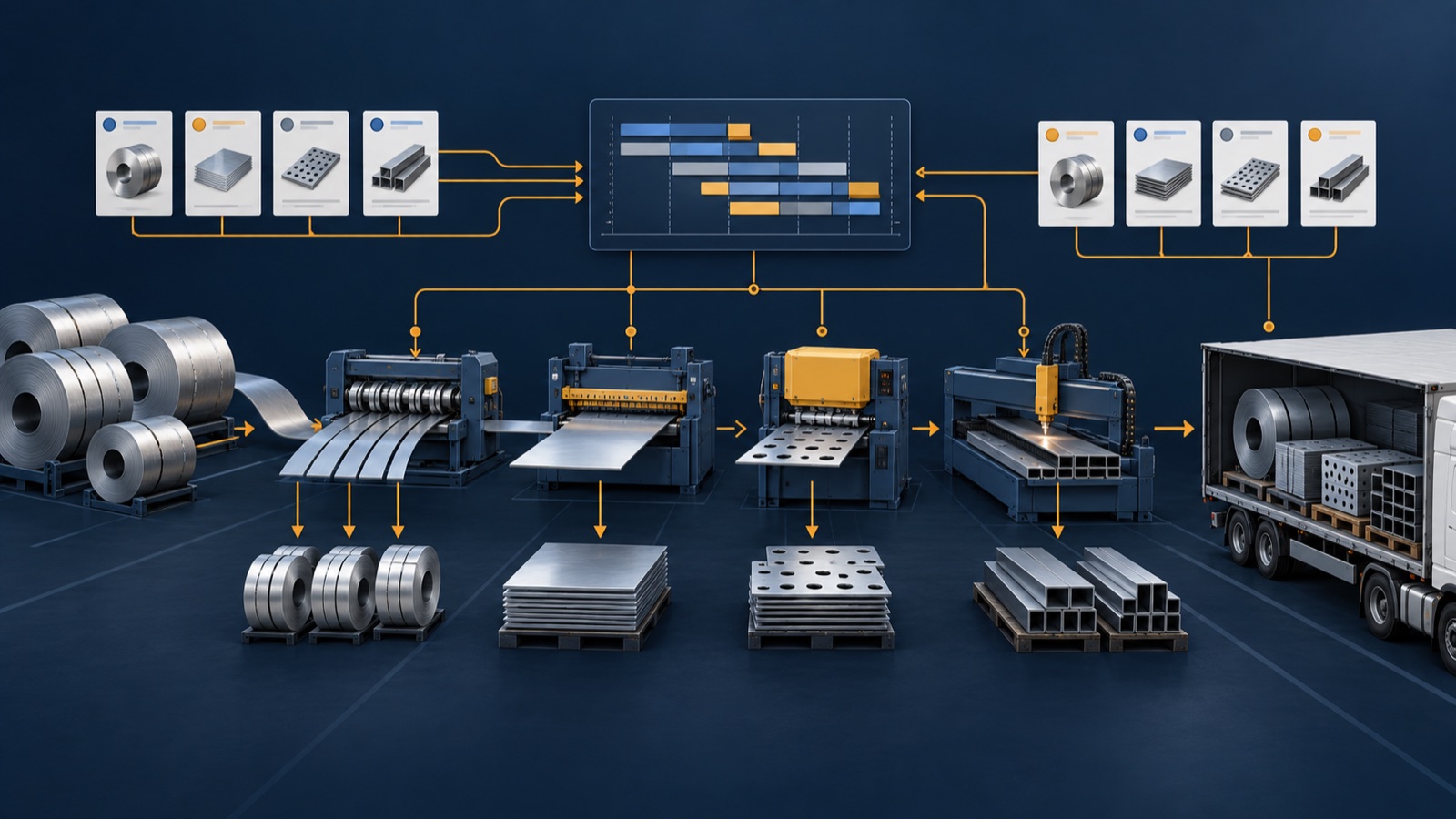
A service centre is managing more than a cutting pattern.
Every planning decision affects yield, setups, inventory age, delivery performance, and how quickly the plant can respond to the next urgent order. The right plan is the one that works on the shop floor — not only the one that looks best on paper.
Material readiness
Use suitable mother coils and arisals intelligently, while respecting grade, surface, metallurgy, thickness, and traceability requirements that can't simply be waived for convenience.
Production reality
Account for finite machine capacity, tooling, side trim, coil-width limits, knife life, setups, changeovers, shifts, and maintenance — the constraints that decide whether a plan is actually feasible.
Customer commitment
Plan around promised dates, on-time-in-full performance, order tolerances, and the commercial reality that exceptions need a person's sign-off, not a silent default.
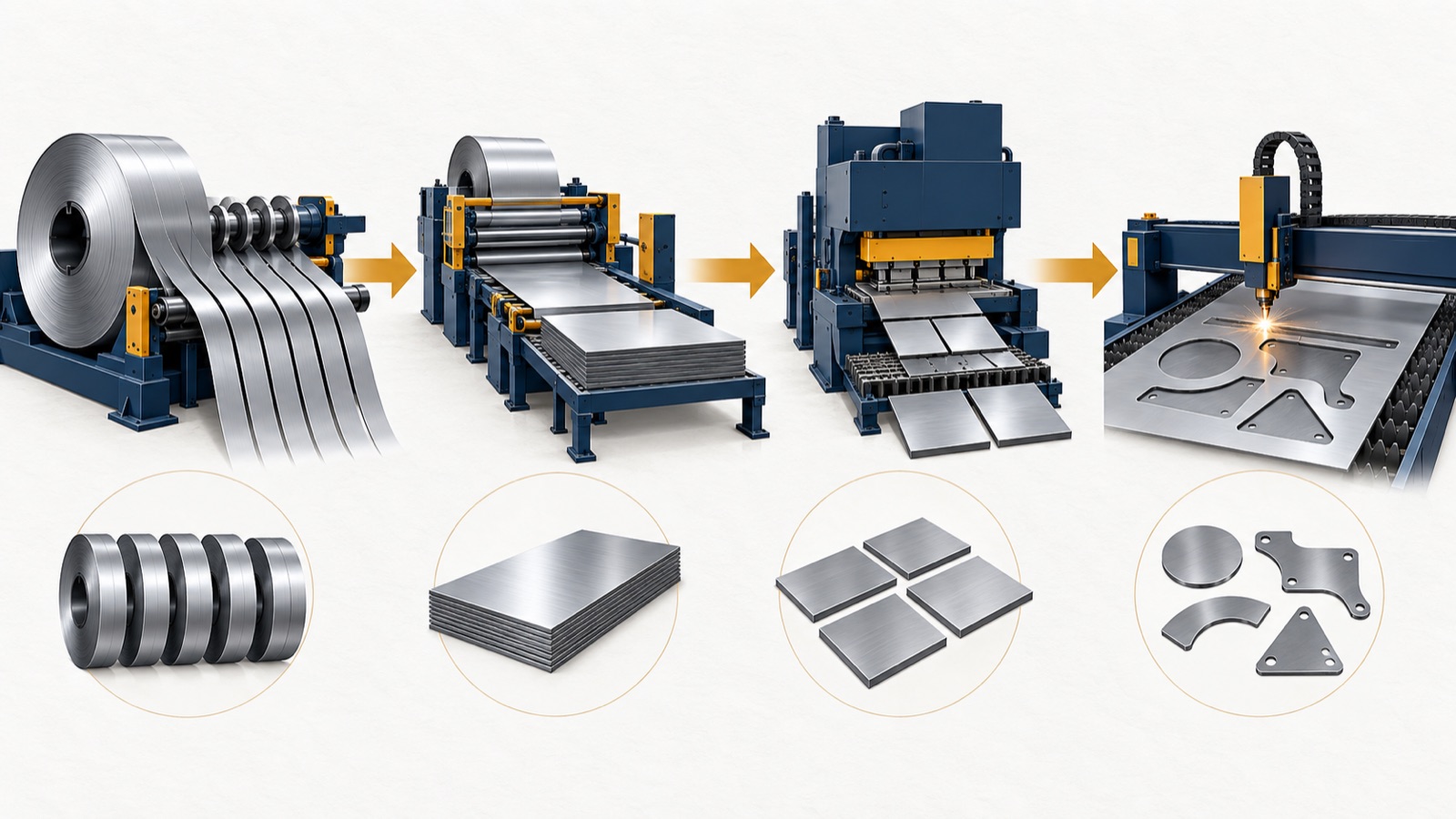
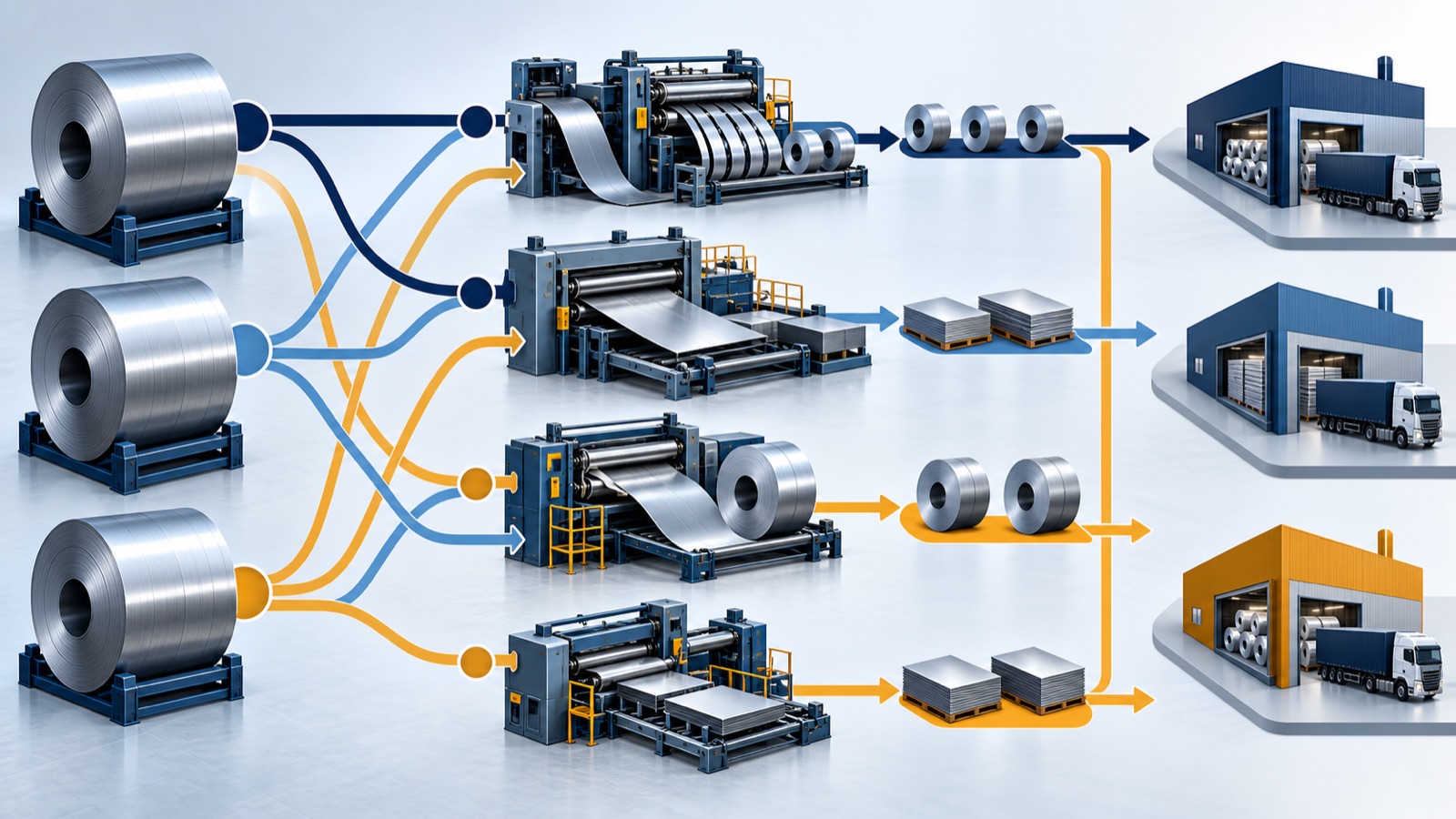
One mother coil becomes many different customer products.
Slitting narrows a coil into multiple child coils. Cut-to-length turns it into rectangular sheets or plates. Blanking cuts sheets into rectangular blanks. Profile cutting produces non-rectangular shapes — including automotive-component blanks — from coil or pre-cut sheet.
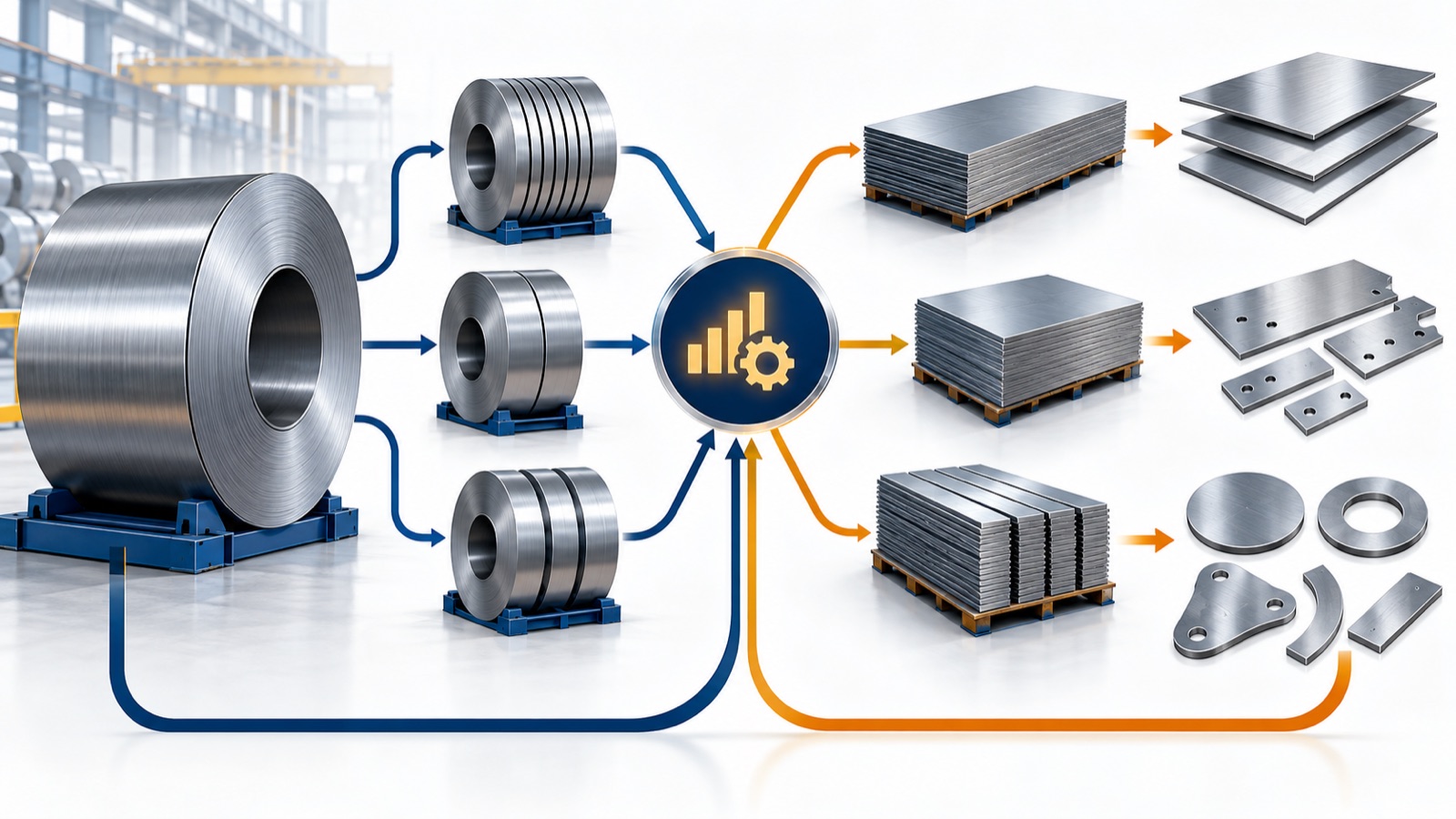
The same available material can serve very different orders.
A single mother coil doesn't map to a single product. Depending on what's actually on order, it can become several narrow coils, a stack of sheets, or a batch of shaped blanks. The planning decision is which outcome to build toward — and that decision should be visible, not buried in a spreadsheet formula.
Use existing stock, or indent new material?
Existing stock and arisals should generally be considered before fresh material is ordered — but the goal isn't to maximize remnant reuse at any cost. It's to consume what's suitable and indent only what's genuinely needed.
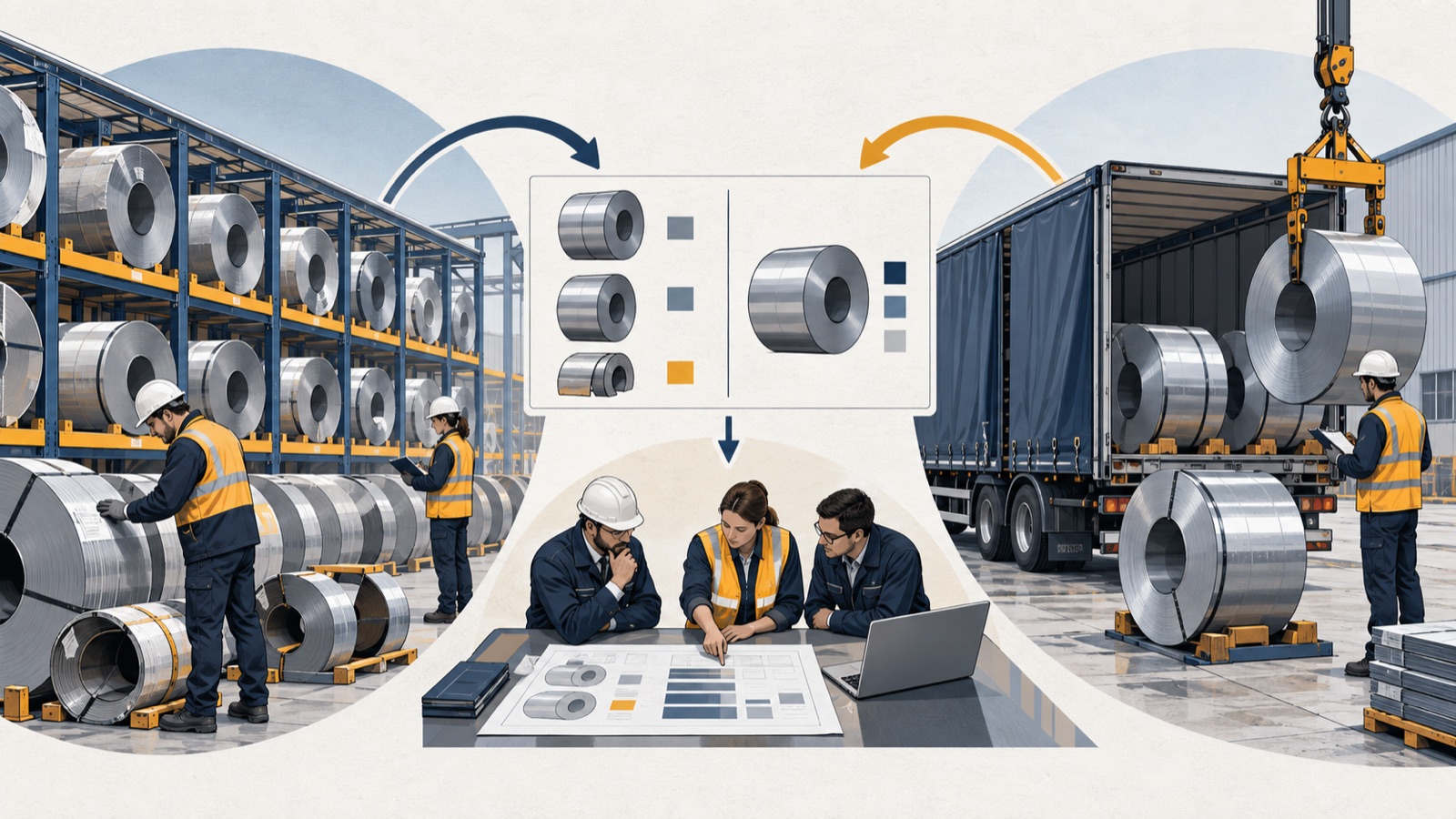
Supplier constraints are real, and the engine has to respect them. Mother-coil widths are set by the supplying mill — Supplier A might require a minimum width of 900 mm, Supplier B 1,000 mm. A service centre can't simply combine two 250 mm orders and indent a 500 mm coil if no approved supplier actually offers that width. Indent logic has to fit compatible demand into what a real supplier can deliver — and show the unused width, residual tonnage, and yield that decision implies.
Orders and coils rarely match up one-to-one.
One mother coil can fulfil several customer orders. One order can be fulfilled from several mother coils, or partly from stock and partly from a future indent. Pegging every order to the material that actually serves it — and keeping each finished piece identifiable by customer — is the difference between a plan you can trust and one you have to double-check by hand.
The system tracks the full lifecycle of every tonne: unprocessed balance, soft reservation, firm allocation, released production, actual consumption, and any new arisal created along the way.
A mathematically good plan can still be operationally bad.
Pure yield optimization ignores the constraints that actually govern a shop floor. Three limits matter as much as the cutting pattern itself.
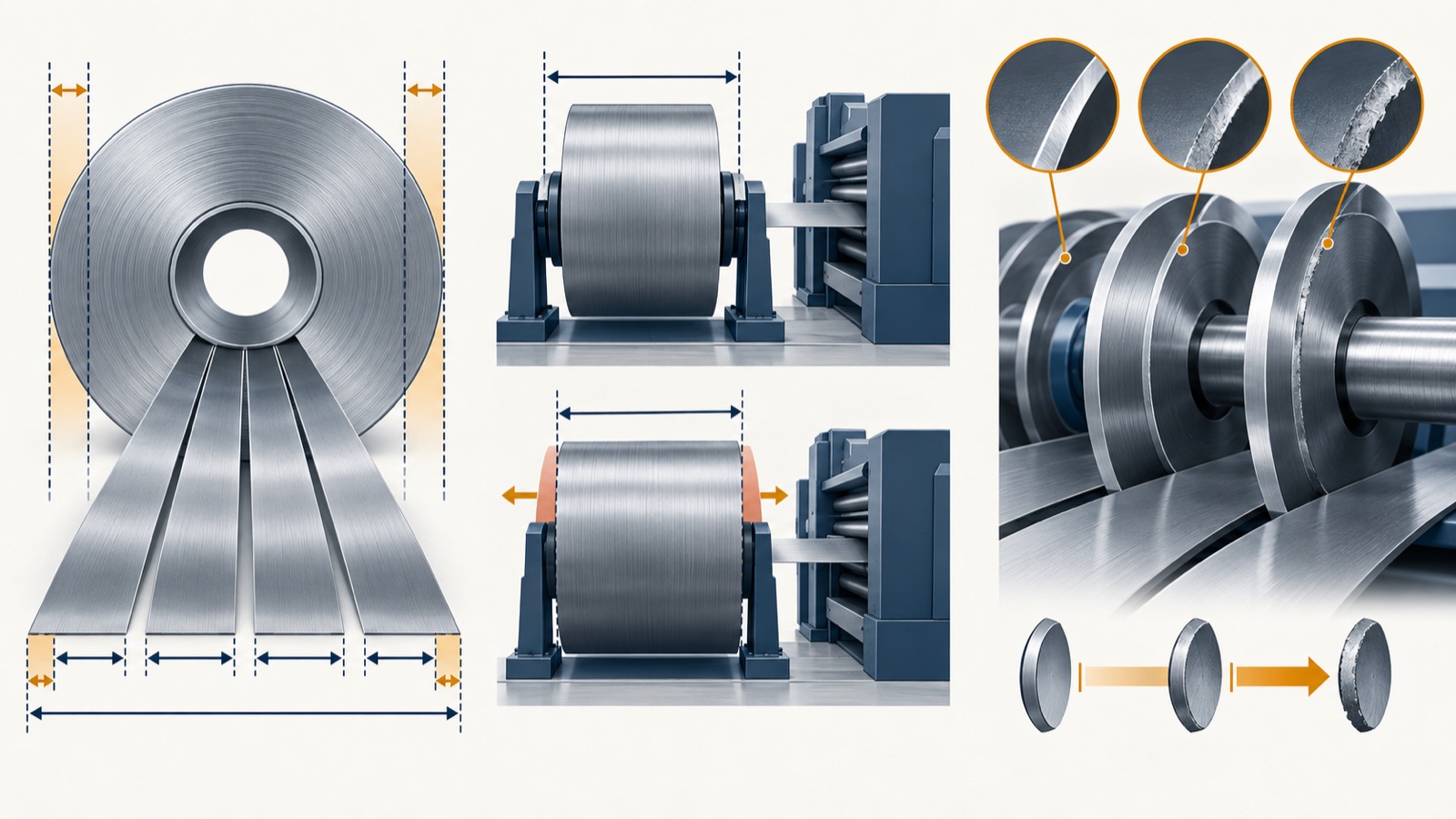
Side trim
Every setup loses some width to trim, typically 5–15 mm depending on machine and material. Child widths plus trim and separation allowances must fit within the input width — not just on paper.
Machine limits
A remnant might be exactly the right width for an order and still be unusable — if it falls below the minimum input width the machine actually accepts, it's not a candidate no matter how good the fit looks.
Tooling and knife life
Knife life is measured in metres processed and setup count. It's a hard limit, not a guideline — a plan that exceeds it isn't a plan the shop floor can actually run.
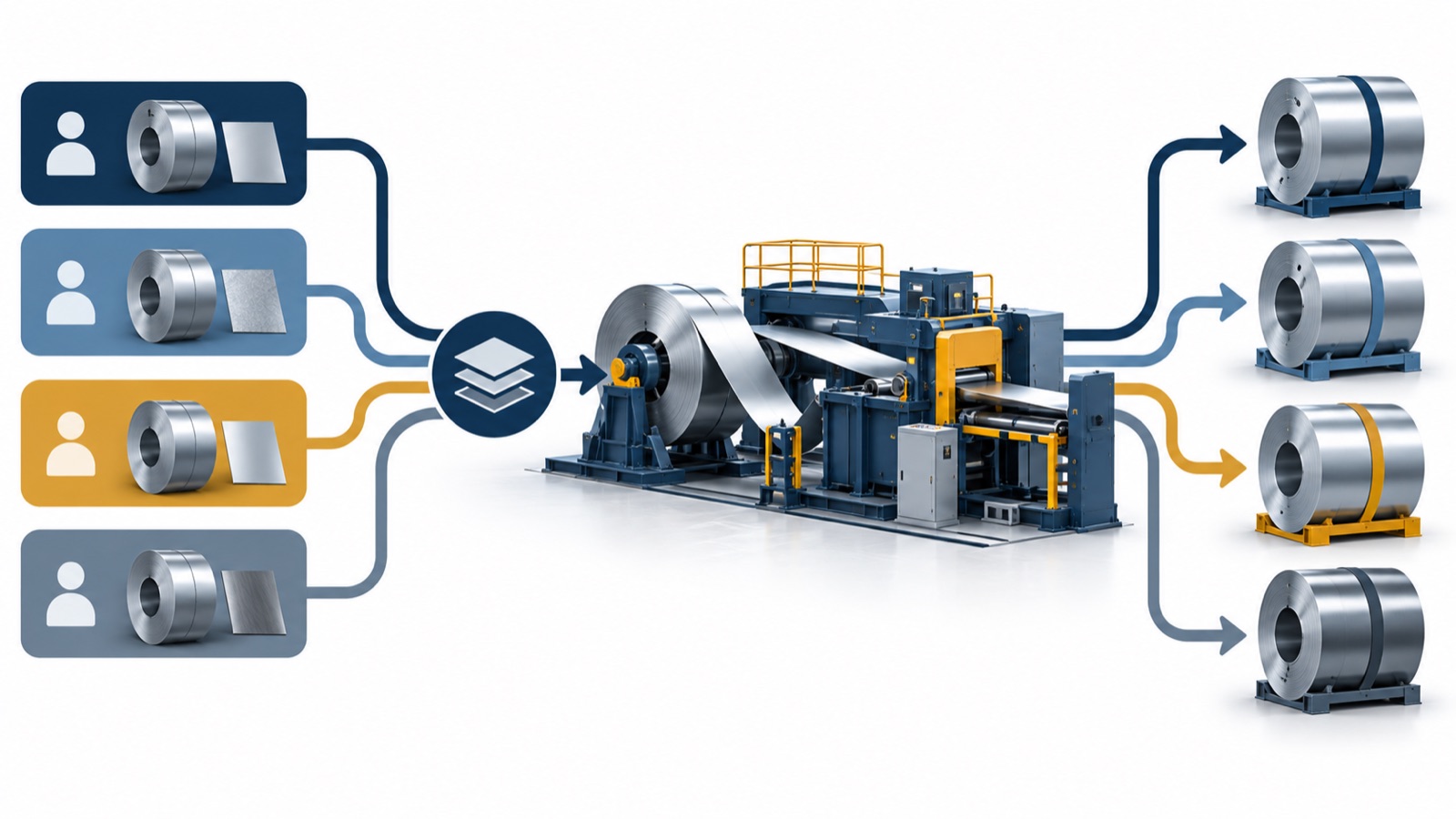
Campaigns group compatible orders without losing order identity.
When there's enough compatible volume, orders can be grouped into a campaign that shares one production setup — fewer knife changes, less downtime, better tooling life. But grouping a setup is not the same as merging orders: every customer's output stays separately identifiable, even when two orders share an identical specification.
Reuse the right remnants. Avoid creating new ones.
Arisals and remnants are inventory too — and the objective isn't to maximize how much of it gets reused, it's to consume what's suitable while designing plans that don't generate more of it than necessary. That means distinguishing saleable product, reusable remnant, unavoidable process scrap, and excess retained inventory as four different things, not one undifferentiated pile.
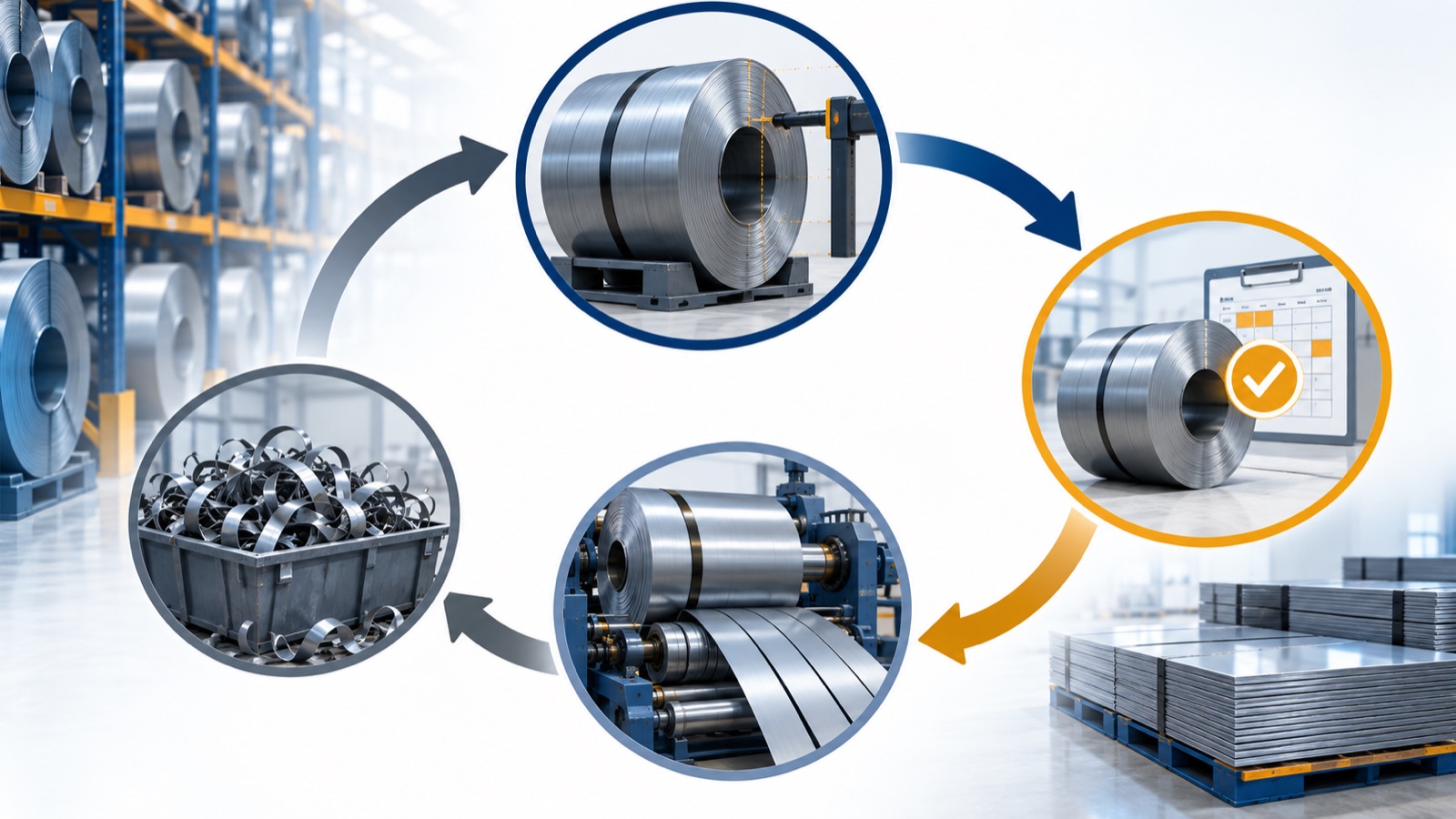
Finite capacity, and re-planning when reality changes.
A machine goes down. An urgent order lands. A supplier delivery slips. The plan has to adapt before the next shift, not after it — and the replacement plan has to respect the same machine, tooling, and material limits as the one it's replacing.

The trade-off is made visible — the choice stays with your people.
When every order can't be completed on time, or the lowest-scrap plan isn't the fastest one, that decision belongs to the people who understand the customer and the business. The engine's job is to show the consequence of each option clearly, not to make the call quietly on their behalf.
“Will we actually hit our delivery commitments this week?”
What it getsRanked plan alternatives with OTIF impact shown up front, not discovered after the fact.
“How do I know this plan is even feasible before I release it?”
What it getsHard constraints — material, machine, tooling, knife life — are respected before anything is optimized, never after.
“What do I actually tell the customer if we can't ship the full order?”
What it getsShortfalls, delays, and tolerance exceptions are surfaced explicitly for sign-off — never silently approved.

Suitable for small and large service centres alike.
Smaller operations can begin with structured spreadsheet uploads and a lightweight planning workspace — no ERP or MES investment required to get value. Larger plants can connect the same engine to ERP, MES, quality, and purchasing systems as their data and operating maturity grow. The underlying engine doesn't change; only how it's fed and how its output is released does.
| Mode | Typical user | Primary data entry | Workflow |
|---|---|---|---|
| Standalone | Small service centre | Fixed spreadsheet/text template | Upload, plan, compare, approve, export |
| MES-connected | Growing service centre | MES plus optional uploads | Integrated refresh, plan, approve, release |
| ERP/MES enterprise | Larger plant | ERP/MES/API integrations | Role-based workflow, live events, formal release |
Better use of material, capacity, and information.
None of this replaces the judgment of your planners and plant managers — it gives them a clearer, faster, and more defensible basis for the decisions they already make every day.

Feasibility before optimization
Hard technical, quality, supplier, resource, and knife-life constraints are never violated, no matter how attractive the theoretical yield looks.
Traceable decisions
Every plan, scenario, change, approval, and override is explainable after the fact — not just at the moment it was made.
Practical yield
Optimizing for usable, saleable output and future inventory value — not just theoretical width utilization on a cutting diagram.
Start a conversation about your planning reality.
Every service centre has its own material rules, machine capabilities, customer expectations, and operating priorities. A useful solution begins by understanding those realities first.